
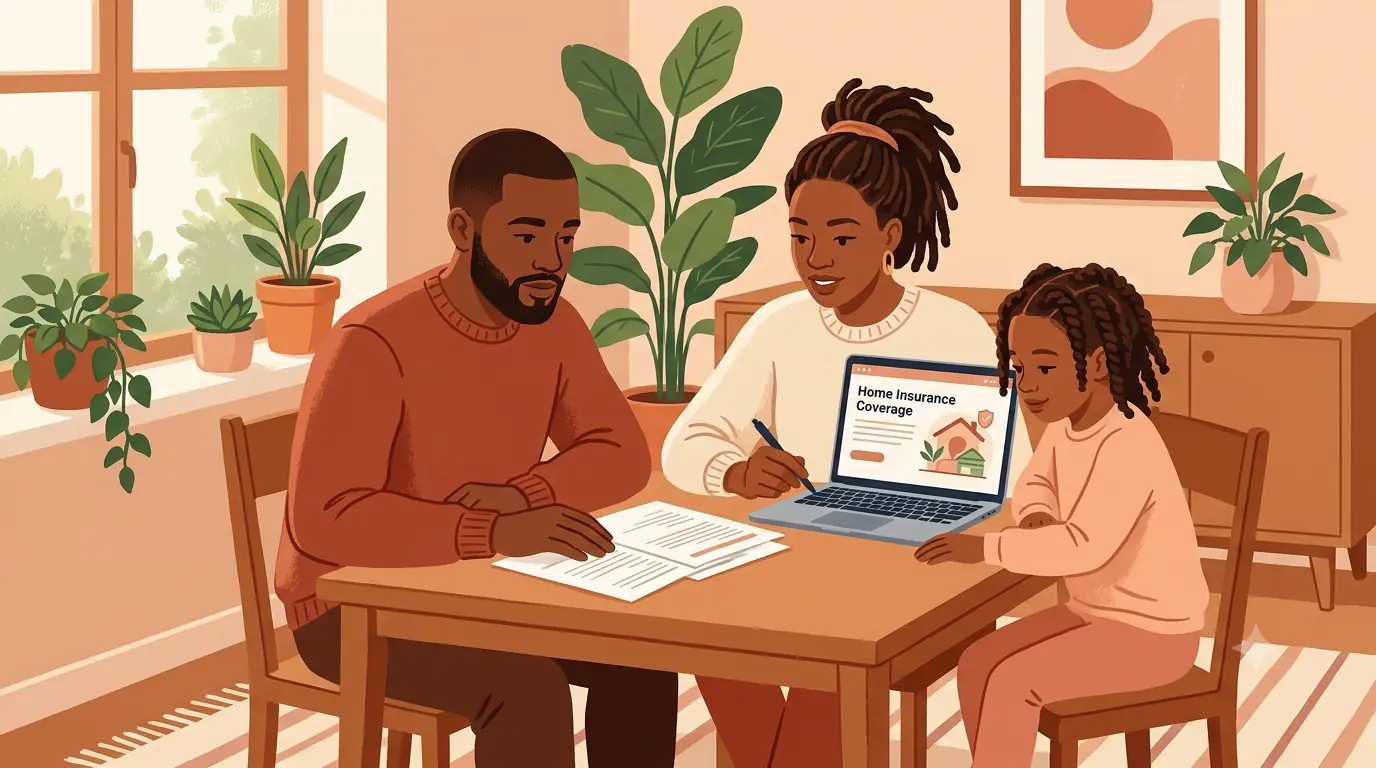
Home Insurance Mistakes First-Time Black Homebuyers Should Avoid
By James A. Sabb | July 2026 | 6 min read
You finally get the keys. Closing day comes and goes, papers are signed, and somewhere in that stack was a homeowners insurance policy you picked because the lender needed it. That is where a lot of first-time buyers get tripped up, and it is one of the most common home insurance mistakes first-time Black homebuyers make.
For many Black families, this is not just another purchase. It is a major step toward building something that lasts. It only takes one uncovered loss to undo years of progress. I have seen it happen, not because people were reckless, but because no one walked them through what matters in a policy.
By the time you finish reading this, you will know how to insure your home for what it costs to rebuild, where first-time buyers tend to leave gaps, and what questions to ask before you sign anything.
Don’t Wait Until Closing Week to Shop for Coverage
Insurance should not be a last-minute task, but it often becomes one. Start looking at policies about two to three weeks before closing. That gives you enough time to compare options, ask questions, and fix anything that does not look right.
Around three weeks out, gather quotes and get a feel for pricing and coverage. Two weeks out, narrow it down and look closer at what each policy includes. The final week is for confirming details, not scrambling to choose something just to satisfy the lender. When everything gets pushed into closing week, people rush. They pick the cheapest option, skip the fine print, and miss gaps that only show up later, usually when it is too late to fix.
Replacement Cost, Not Purchase Price
This is the misunderstanding I see more than any other home insurance mistake. Your purchase price and your rebuild cost are not the same thing. The land has value, but it does not need to be rebuilt after a fire or storm. The structure does.
Say you buy a home for $400,000. That does not mean it costs $400,000 to rebuild. With labor, materials, and today’s construction costs, rebuilding that same home might run closer to $550,000. If your policy only covers $400,000, you are underinsured.
Here is the part most people do not know: insurance companies can apply a co-insurance penalty. That means even on a partial loss, not a total rebuild, they may reduce what they pay because you did not insure the home for its full replacement cost. You are not just short on big claims. You can come up short on smaller ones too.
Flood Coverage Isn’t Automatic, Even Outside Flood Zones
A standard homeowners policy does not cover flood damage. That surprises people every year. According to the National Association of Insurance Commissioners, more than 20 percent of National Flood Insurance Program claims come from outside high-risk flood zones. Flood maps are helpful, but they do not catch everything. Heavy rain, drainage issues, and nearby construction can all change how water moves.
There is also a timing issue. Most policies through the National Flood Insurance Program come with a 30-day waiting period. You cannot wait until a storm is on the radar. If you are buying a home, this is a conversation to have early, not after closing. For more on what a policy needs to cover, see our Property & Renters Insurance Explained guide.
The Cheapest Policy Usually Costs More Later
Price matters. But price without context is where problems start. Two policies can look similar on the surface and be very different where it counts. One may cover your home at full replacement cost, while another pays actual cash value, meaning depreciation is deducted before you get paid. That alone can leave a major gap.
Liability limits are another area people overlook. A lower premium often comes with lower protection if someone gets injured on your property. And the insurer itself matters. Not all companies handle claims the same way. I have seen cases where a homeowner thought they were covered, only to find out after a loss that key items were valued far lower than expected or excluded entirely. The savings upfront did not come close to covering the difference.
What Your Policy Actually Covers
Most people do not read their full policy, and to be fair, it is not light reading. But two parts are worth your attention: the declarations page and the exclusions section. The declarations page tells you what is covered and for how much. The exclusions section tells you what is not, and that is where surprises usually live.
Common gaps include sewer backups, limits on mold damage, restrictions on business equipment if you work from home, and exclusions tied to certain dog breeds. You do not need to read every line, but you need to know where your policy stops. That is the difference between expecting coverage and having it. Our Auto Insurance Explained guide walks through this same declarations-and-exclusions approach if you want another example of how to read a policy.
Liability Coverage Protects More Than the House
Homeowners insurance is not just about the structure. It also covers what happens around it. If someone slips and gets hurt on your property, if your dog bites a visitor, or if a tree from your yard damages a neighbor’s home, liability coverage is what responds.
Standard policies often include limits between $100,000 and $300,000. In many cases, that is not enough to protect your assets. This is worth asking your insurer about, including whether higher limits or an umbrella policy make sense for your situation.
The Bottom Line
The insurance choices made around closing do not feel urgent, but they matter more than most people realize. One bad year does not have to wipe out what you have built. The difference is usually in the details people rushed through at the start. Review your coverage now, and revisit it every year as your home and everything in it changes.
Frequently Asked Questions
How much homeowners insurance do I actually need as a first-time buyer?
You need enough coverage to fully rebuild your home at current construction costs, not what you paid for it. That number should come from a replacement-cost estimate, not your purchase price. You will also want to account for personal belongings and liability protection.
What’s the difference between replacement cost and market value?
Market value includes the land and what buyers are willing to pay in your area. Replacement cost focuses only on what it would take to rebuild the structure from the ground up. Insurance coverage is based on replacement cost, not market value.
Do I need flood insurance if I’m not in a flood zone?
It is still worth considering. More than 20 percent of flood claims happen outside high-risk areas, and standard homeowners insurance will not cover flood damage at all. Timing matters too, since flood policies typically carry a 30-day waiting period before coverage takes effect.
What does homeowners insurance not cover?
Typical exclusions include flood damage, sewer backups, certain types of mold, and some business-related property used at home. Policies can also carry limits or restrictions tied to specific risks. The exclusions section of your policy spells out these details.
Want to keep learning?
Explore plain-language guides on insurance, money, and everything in between.
Written & Reviewed by James A. Sabb
30+ Years Experience | Health Insurance Advisory Since 2015 | CEO, Sabb Media International LLC
James A. Sabb has spent over three decades in regulated industries, including 10+ years advising individuals and families on health insurance decisions. He founded SabbMedia.com to bring that expertise to everyday people, no sales pressure, no jargon, just clarity.
Disclaimer: James shares this content to educate, not to advise. For decisions specific to your situation, always consult a licensed insurance professional or financial advisor.