
What Is a Graded Death Benefit, and Why It Catches Seniors Off Guard
By James A. Sabb | September 2026 | 8 min read
Deborah’s mother died fourteen months after buying a guaranteed-issue life insurance policy, the kind that asks no health questions and accepts everyone who meets the age requirements.
The family expected the full $20,000 death benefit to cover the funeral and settle a few remaining bills. Instead, the check was for $2,200.
Deborah called the insurer, certain there had been a mistake. There hadn’t. The policy had a two-year waiting period, and her mother’s death occurred during that period.
What Guaranteed-Issue Life Insurance Is
Guaranteed-issue life insurance asks no health questions and requires no medical exam. If you fall within the insurer’s age range, typically 50 to 85, you are automatically approved.
This type of policy is designed for people who may not qualify for standard coverage because of serious health conditions or a previous decline from another insurer.
The tradeoff is real. Premiums run two to three times higher than those for a fully underwritten policy with the same coverage amount. The face amounts are also limited, usually to $25,000 to $30,000.
That may be enough for a funeral and some remaining debts. It is not meant to replace income.
There is another tradeoff, and it is the one families often discover too late: the graded death benefit.
How the Graded Death Benefit Works
During the first two years of the policy, sometimes three, depending on the insurer, a death from natural causes usually does not result in the full face amount being paid.
Instead, the beneficiary typically receives the premiums paid, plus interest. The interest is commonly around 10 percent.
For example, suppose the policy has a $20,000 death benefit and the monthly premium is $60. If the insured dies fourteen months after buying the policy, approximately $840 in premiums has been paid. With interest, the payout might be about $924.
That is a long way from $20,000.
Accidental death is usually treated differently. Most guaranteed-issue policies pay the full face amount immediately for a covered accidental death, even if the death occurs on the first day of the policy. The graded period applies specifically to death from illness or natural causes, not to a covered accident.
Not every insurer calculates the payout the same way. Many return the premiums plus interest throughout the entire graded period. Others use a tiered schedule, paying a percentage of the face amount that increases each year, for example, 25 percent in year one and 50 percent in year two before reaching the full 100 percent in year three. Your policy contract determines which method applies. The difference can be substantial on the same claim.
After the graded period ends, the policy pays the full face amount for any cause of death and functions like any other permanent life insurance policy from that point forward.
Why Insurers Structure It This Way
Guaranteed-issue insurance exists because the insurer does not ask about your health. Without some protection, someone who already knew they were terminally ill could buy a policy and expect a payout within weeks. No insurance pool could absorb that situation on a large scale.
The graded period gives the insurer a way to accept applicants without health screening while protecting against that specific risk. It is not a penalty aimed at any one buyer. It is built into the product for everyone who purchases it.
That is also one reason the premiums are higher than those for a health-screened policy.
Guaranteed Issue Versus Simplified Issue
Guaranteed issue is not the only option for someone who may not qualify for full medical underwriting. Simplified-issue life insurance falls somewhere between the two. It asks a short list of health questions but does not require a medical exam. Approval is not automatic.
The tradeoff goes in the other direction. Simplified-issue policies often skip the graded death benefit altogether or use a shorter waiting period. They may also offer higher coverage limits for a similar premium.
The catch is that truthful answers to the health questions can still result in a decline. Guaranteed issue does not have that particular risk.
If you were declined for a standard policy because of one specific condition, check whether a simplified-issue policy might still accept you before moving directly to guaranteed issue. For more on how a particular health condition can affect your choices, see our guide on life insurance with a pre-existing condition.
When Guaranteed Issue Still Makes Sense
None of this makes guaranteed-issue coverage a bad product. For someone who has been declined elsewhere because of a serious health condition, it may be the only available life insurance option. A policy that pays in full after the graded period can be meaningfully better than having no coverage at all.
The waiting period also matters less once it has passed. After the two- or three-year period ends, depending on the policy, the coverage works like ordinary permanent life insurance. The limitation is mainly a first-two-or-three-years issue, not a lifetime restriction.
How to Check What Your Policy Promises
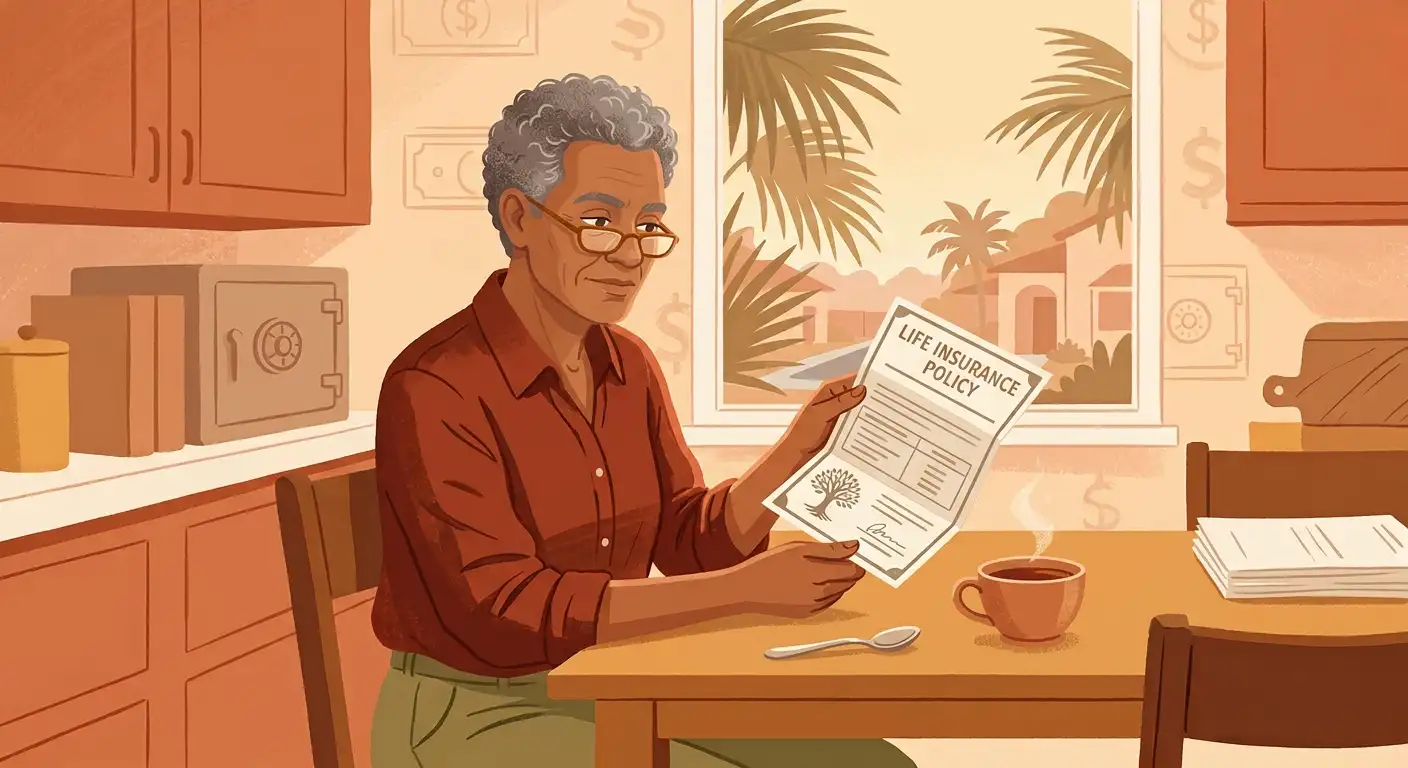
Pull out the policy contract, not the marketing brochure. Look for a section titled “graded death benefit,” “graded benefit period,” or “limited death benefit period.”
Then confirm the following:
- The exact length of the waiting period. Two years and three years are both used, depending on the insurer.
- What the policy pays for a natural-cause death during that period.
- Whether the payout is a return of premiums plus a stated interest rate or a tiered percentage of the face amount.
- Whether accidental death is covered for the full face amount from the first day.
Most policies handle accidental death that way, but confirm it in your own contract rather than assuming.
If you bought a policy for a parent or relative, check this now. Do not wait until a claim is being filed.
What You Can Do This Month
- Pull out the actual policy contract, not the summary page, and locate the section on the graded death benefit.
- If the language is unclear, call the insurer directly. Ask what a natural-cause death would pay today, in dollars, based on how long the policy has been active.
- If you are shopping for a new policy and can qualify for at least a simplified-issue policy, compare those options first. They often skip the graded period entirely.
- For a fuller look at life insurance options for older adults, see our guide on Life Insurance for Seniors.
Common Mistakes People Make
- Assuming “guaranteed acceptance” also means a guaranteed full payout from day one
- Not knowing whether the policy uses a premium-return or tiered-percentage payout structure
- Buying based on the lowest premium without checking how long the graded period lasts
- Failing to confirm whether accidental death is covered separately from the graded period
- Waiting until a claim is filed to find out what the policy promises
The Bottom Line
A graded death benefit is not exactly hidden. It is disclosed in the policy contract. But it is rarely explained in plain language before someone buys the coverage.
For a policy intended to pay final expenses, discovering the waiting period during an actual claim is the worst possible time to learn about it.
Pull out your policy contract this month and find that section before your family needs it. For the fuller picture on protecting your family’s finances, see our guide on Life Insurance Explained.
Frequently Asked Questions
What is a graded death benefit?
A graded death benefit is a waiting period, typically two to three years, in guaranteed-issue life insurance policies. If the insured dies from natural causes during that period, the beneficiary usually receives the premiums paid back plus interest, rather than the full face amount.
Does a graded death benefit apply to accidental death?
No. Most guaranteed-issue policies pay the full face amount immediately for an accidental death, even during the graded period. The waiting period applies specifically to death from illness or natural causes.
How long does a graded death benefit period usually last?
Most commonly two years, although some insurers use a three-year period. The exact length is stated in the policy contract and varies by insurer.
What happens after the graded death benefit period ends?
The policy pays the full face amount for any cause of death and functions like a standard permanent life insurance policy from that point forward, with no further restrictions.
Is guaranteed-issue life insurance worth buying despite the graded death benefit?
For someone who has been declined elsewhere because of a health condition, it can still be the right choice. It may be the only coverage available. The important thing is to understand the graded period before buying instead of assuming full coverage starts immediately.
Want to keep learning?
Explore plain-language guides on insurance, money, and everything in between.
Written & Reviewed by James A. Sabb
30+ Years Experience | Health Insurance Advisory Since 2015 | CEO, Sabb Media International LLC
James A. Sabb has spent over three decades in regulated industries, including more than ten years advising individuals and families on federally regulated health insurance decisions. He founded SabbMedia.com to bring that expertise to everyday Americans. No sales pressure, no jargon, just clarity.
Disclaimer: James shares this content to educate, not to advise. For decisions specific to your situation, always consult a licensed insurance professional or financial advisor.