
Florida Home Insurance Rates Are Dropping in 2026: What It Actually Means for Your Bill
By James A. Sabb | September 2026 | 8 min read
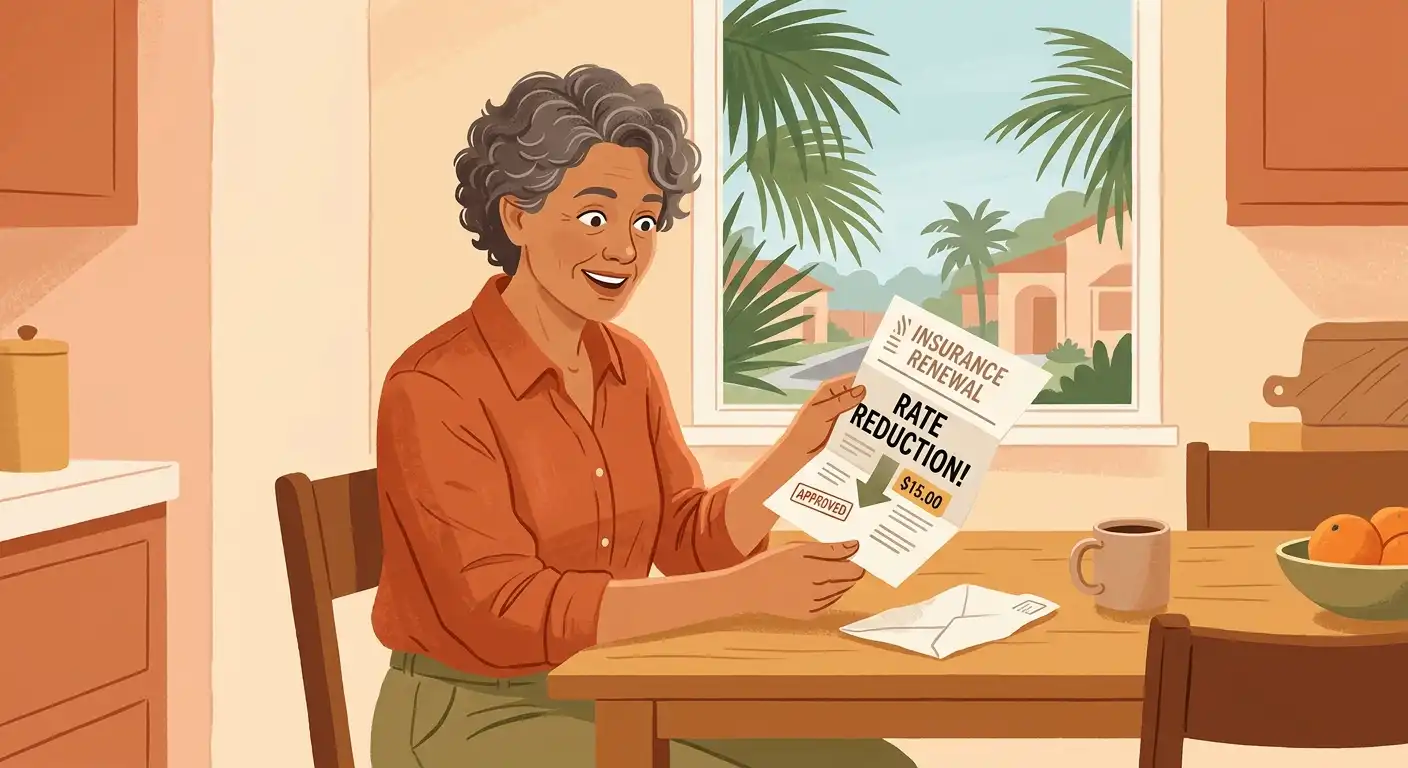
Renee opened her Citizens renewal notice in Fort Lauderdale expecting the same bad news she’d received every year since 2022: another increase. She almost put it aside. When she finally opened it, the number was lower than last year’s, by a few hundred dollars. She checked the date twice, certain it had to be a mistake.
It wasn’t.
What Changed
For most of the last decade, a Florida homeowners insurance renewal meant one thing: a bigger bill.
Citizens Property Insurance, the state’s insurer of last resort, had not cut its average rates since 2015. That changed in 2026.
Citizens’ blended statewide average across all personal-lines policies dropped from $2,943 to $2,867, a 2.6 percent decrease, according to Citizens’ December 2025 rate filing. For standard homeowners policies, known as HO3, the statewide average dropped 4.8 percent, from $3,506 to $3,339.
Three developments helped drive the change. Legal reforms passed in 2022 and 2023 eliminated one-way attorney fees and restricted assignment-of-benefits abuse, both of which had contributed to years of costly litigation against insurers.
Seventeen new insurance companies have entered the Florida market since those reforms passed. At the same time, Citizens has become much smaller. Its policy count fell from a peak of 1.42 million policies in October 2023 to a projected 385,000 by the end of 2025. More than 546,000 policies moved to private insurers through the state’s depopulation program.
The Real Numbers, By Policy Type and County
The size of the decrease depends heavily on your policy type. The headlines don’t always make that clear.
For HO3 policies, the standard homeowners policy most people carry, Broward County’s average premium dropped from $5,094 to $4,374. That’s a 14.1 percent cut. Miami-Dade dropped from $4,787 to $4,112, also a 14.1 percent decrease. Those are real numbers from Citizens’ 2026 rate filing.
The blended statewide figure tells a different story because it combines HO3 policies with wind-only, mobile home, and other policy types. Taken together, the overall average moved 2.6 percent. If you don’t have a standard HO3 policy, your actual change may look very different from the 14.1 percent headline number.
Why Monroe County Is the Exception
Not every county moved in the same direction. Monroe County, the Florida Keys, is the clearest example of why “rates are dropping” does not mean the same thing for every homeowner.
For HO3 policies, Monroe’s average premium dropped 8.5 percent, from $7,184 to $6,571. But Monroe’s blended personal-lines average rose 2.5 percent. The likely reason is the county’s larger share of wind-only and mobile home policies, which moved differently from standard HO3 policies.
So a Monroe County homeowner with a standard homeowners policy likely saw a real decrease. A homeowner with a wind-only or mobile home policy may not have.
One Way to Cut Your Rate Further: Wind Mitigation Credits
The statewide rate cuts are not the only way to lower your premium. Florida law, under Statute 627.0629, requires every residential insurer in the state to offer premium discounts for verified wind-resistant features. Insurers are required to honor those discounts once the features are properly documented.
The process starts with a wind mitigation inspection, a state-standardized visual inspection recorded on the Uniform Mitigation Verification Inspection Form, also known as OIR-B1-1802. A certified inspector checks features such as your roof shape, how the roof deck is attached, and whether your windows and doors have impact protection, then submits the completed form to your insurer.
Depending on the features your home has, the credit can reduce the windstorm portion of your premium by roughly 25 to 45 percent. Because wind coverage often makes up a large share of a Florida homeowner’s total premium, that can make a meaningful difference.
The inspection typically costs $100 to $200. The form remains valid for five years unless you make major changes to the home. If you’ve never had a wind mitigation inspection, or your last one is getting old, consider doing it during the same renewal cycle when you review your new rate.
What This Means for Your Next Renewal
The rate change is not automatic, and it does not take effect immediately for every policy. For Citizens multiperil policies, the new rates apply to new business and renewals beginning July 1, 2026. If your policy renewed in the spring, you may not see the new rate until your next renewal cycle.
It’s also worth shopping around even if you’re not with Citizens. Private insurers have been competing for policies moved out of Citizens through the depopulation program, which means better offers may now be available to homeowners who were previously turned away or priced out.
A lower rate does not automatically mean lower-quality coverage. Still, make sure your coverage limits keep up with the cost of rebuilding your home. For more on how that number affects what you could receive after a claim, see our guide on replacement cost versus actual cash value.
What You Can Do This Month
- Pull out your most recent renewal notice and compare it directly with last year’s notice. Don’t rely on the statewide headline number.
- If you’re still with Citizens, ask your agent whether a private insurer is now offering comparable coverage for less. Many insurers are actively competing for these policies.
- Confirm that your dwelling coverage limit still reflects what it would cost to rebuild your home today. A lower premium is only a win if the coverage itself still holds up.
- For a fuller explanation of what your policy covers, see our guide on Property & Renters Insurance Explained.
Common Mistakes People Make
- Assuming the rate cut applies before the policy’s renewal date
- Assuming every policy type in the county moved in the same direction
- Staying with Citizens without checking current private-market offers
- Treating the statewide average as your personal rate change
- Lowering coverage limits to chase savings instead of shopping for the same coverage elsewhere
The Bottom Line
Florida home insurance rates are falling for many policyholders in 2026. It is the first real relief in more than a decade, driven by litigation reform and a healthier private market.
But the size of the decrease depends on your county and your policy type. Monroe County shows that the trend is not the same everywhere.
Pull out your renewal notice and compare it directly with last year’s number. That will tell you more than the statewide headline.
Frequently Asked Questions
Are Florida home insurance rates going down in 2026?
Yes, for many policyholders. Citizens Property Insurance cut its blended statewide average by 2.6 percent, and standard homeowners (HO3) policies dropped by an average of 4.8 percent statewide, with some counties like Broward and Miami-Dade seeing average cuts of 14.1 percent.
When do I see the lower rate on my policy?
The new rates apply to new business and to existing policies when they come up for renewal, not immediately. Citizens’ 2026 multiperil rate changes take effect starting July 1, 2026.
Does every Florida county have lower rates in 2026?
No. Most counties saw decreases, but the size varies significantly by policy type, and at least one county, Monroe, saw an increase in its blended average even though its standard homeowners (HO3) rate dropped.
Should I still shop around if my rate went down?
Yes. Private insurers have been competing for policies leaving Citizens’ depopulation program, so a lower renewal number doesn’t necessarily mean it’s the best price now available to you.
What caused Florida home insurance rates to drop after years of increases?
Legal reforms in 2022 and 2023 reduced costly litigation against insurers, 17 new insurance companies have entered the Florida market since then, and Citizens’ own policy count has fallen 73 percent from its 2023 peak as coverage shifted back to the private market.
Want to keep learning?
Explore plain-language guides on insurance, money, and everything in between.
Written & Reviewed by James A. Sabb
30+ Years Experience | Health Insurance Advisory Since 2015 | CEO, Sabb Media International LLC
James A. Sabb has spent over three decades in regulated industries, including more than ten years advising individuals and families on federally regulated health insurance decisions. He founded SabbMedia.com to bring that expertise to everyday Americans. No sales pressure, no jargon, just clarity.
Disclaimer: James shares this content to educate, not to advise. For decisions specific to your situation, always consult a licensed insurance professional or financial advisor.