Why You Keep Making the Same Money Mistakes: Understanding Your Financial Archetype and What It Means for Your Future
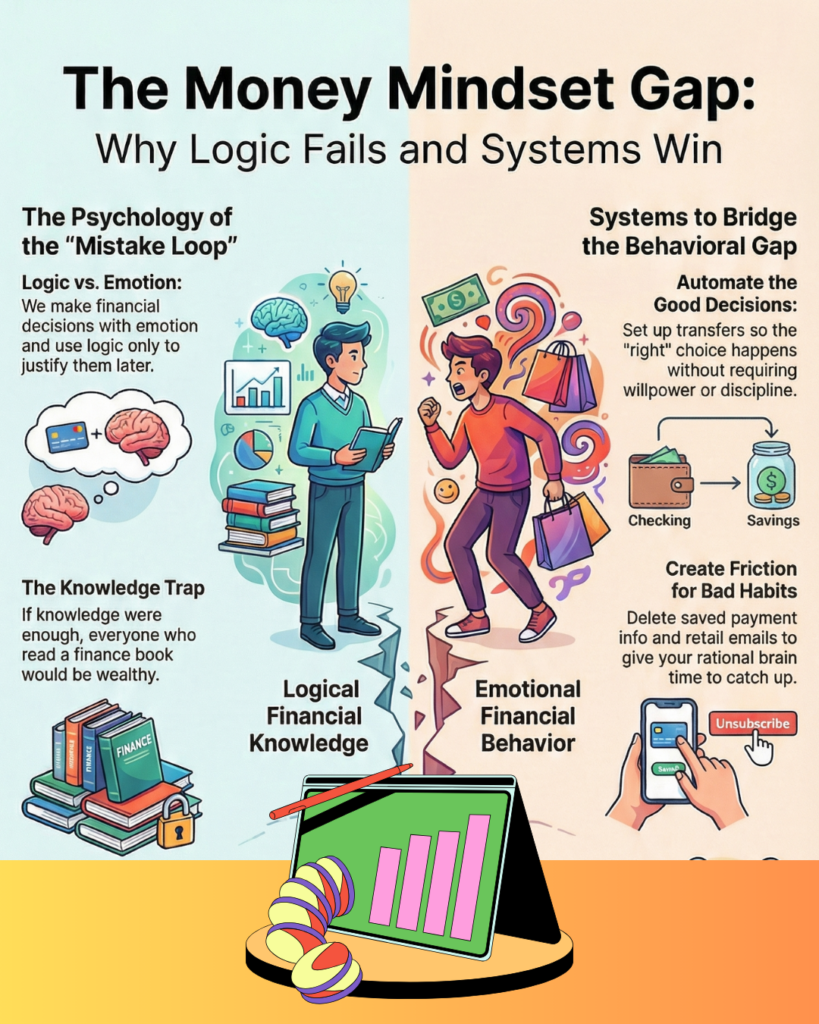
Key Takeaways ✓ Most money mistakes are not math problems — they are behavior problems driven by emotion, habit, and belief ✓ Understanding why you make a mistake is the only way to permanently stop making it ✓ The financial patterns you repeat today were usually formed long before you had any money ✓ Awareness without a system to replace the behavior changes nothing ✓ Small consistent financial decisions compound over time exactly the same way small consistent mistakes do You have told yourself you were going to stop overspending. You made a budget. You committed to saving more. And then three weeks later you were right back where you started, wondering what happened. If this sounds familiar, you are not bad with money. You are human. The same money mistakes repeat themselves not because people lack knowledge but because behavior is harder to change than information is to learn. This guide explains the real reasons behind the financial patterns that keep showing up in your life — and what it actually takes to break them. The Real Reason Most Money Mistakes Repeat Personal finance education focuses almost entirely on the mechanics of money — how to budget, how to invest, how compound interest works. What it rarely addresses is the psychological dimension of financial behavior. And that is where most people actually struggle. Research in behavioral economics consistently shows that people do not make financial decisions primarily with logic. They make them with emotion and then use logic to justify what they already decided. Fear, insecurity, optimism bias, peer pressure, and childhood money experiences all drive financial behavior more powerfully than any spreadsheet ever will. The Hard Truth If knowledge were enough to change financial behavior, everyone who has read a personal finance book would be financially secure. Knowledge is necessary but it is not sufficient. Behavior change requires understanding the specific emotional driver behind the specific mistake. The 6 Most Common Repeating Money Mistakes 1. Spending to Feel Better in the Moment Emotional spending is one of the most common and least discussed financial patterns. Stress, boredom, loneliness, and even celebration trigger spending as a coping mechanism. The purchase feels good for a brief window. Then the financial guilt sets in. Then the stress that triggered the spending returns — often worse. Then the cycle repeats. How to break it: Identify your specific emotional triggers before you are in them. Create a 24-hour rule for non-essential purchases over a set amount. Find a non-financial replacement behavior for the emotional state that triggers spending. 2. Avoiding Money Altogether Many people who struggle financially are not reckless spenders. They are avoiders. They do not open bank statements. They do not look at their account balance. They do not review their bills. The avoidance feels protective in the short term but the financial problems it allows to grow are far more damaging than the discomfort of facing them early. How to break it: Schedule one 15-minute money check-in per week. Make it low-stakes — you are just looking, not solving everything at once. Consistent small exposures reduce the anxiety that drives avoidance over time. 3. Lifestyle Inflation That Outpaces Income Growth Every time income increases, spending increases to match it — sometimes beyond it. A raise that should have accelerated savings instead just funds a more expensive lifestyle. This is lifestyle inflation, and it is one of the most consistent wealth-building killers across all income levels. People earning $100,000 per year often have no more financial cushion than people earning $50,000 because their expenses scaled exactly with their income. How to break it: Commit to saving or investing at least 50 percent of every raise or income increase before adjusting your lifestyle. Automate the savings so the money is moved before you have a chance to spend it. 4. Financial Decision Making Under Social Pressure Buying things to match what peers have, attending expensive events out of social obligation, lending money you cannot afford to lose, or making major financial decisions to avoid conflict — all of these are forms of social financial pressure. They rarely show up in budgeting apps but they quietly drain wealth over time. How to break it: Get clear on your own financial values and goals first. When a social spending pressure arises, measure it against your goals — not against what others are doing or what feels expected. 5. Treating Savings as What Is Left Over Most people save whatever is left at the end of the month after spending. The problem is that spending expands to fill available money. There is almost never anything left over. Saving has to come first — before spending, before discretionary decisions, before anything else. Pay yourself first is not a cliche. It is the only savings system that actually works consistently. How to break it: Set up an automatic transfer to savings on the same day your paycheck arrives. Treat it like a bill you cannot skip. Start with any amount — even $25 per paycheck. The habit matters more than the amount when you are starting. 6. Waiting for the “Right Time” to Start When the debt is paid off. When I get that raise. When the kids are grown. When things settle down. The right time to start saving, investing, and building financial security is always some version of not right now. Meanwhile compounding works against you every month you delay. The people who build wealth are not the ones who waited for perfect conditions — they are the ones who started imperfectly and kept going. How to break it: Identify the specific condition you are waiting for and ask yourself honestly whether it will actually change your financial behavior when it arrives. Usually it will not. Start now with whatever you have. The System That Actually Changes Financial Behavior Awareness alone does not change behavior. You can know exactly why you overspend and still do it. What actually works is replacing the behavior with