
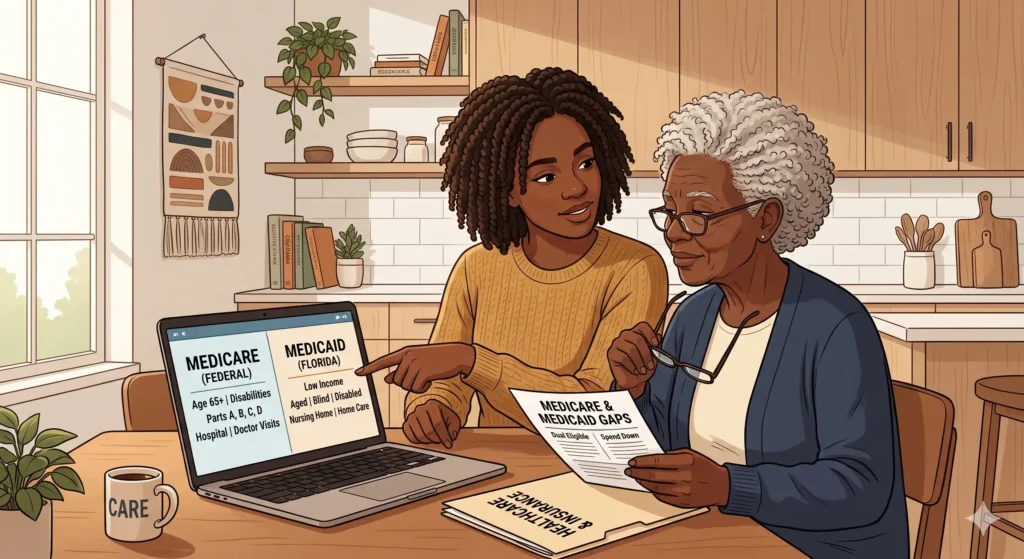
Medicare vs Medicaid Difference: A Plain-Language Guide to Both Programs
By James A. Sabb | April 2026 | 7 min read
Key Takeaways
- Medicare is a federal program primarily for people 65 and older, or those with certain disabilities. It is not based on income.
- Medicaid is a joint federal and state program for people with low incomes. Eligibility and benefits vary by state.
- Some people qualify for both programs at the same time. They are called dual eligibles.
- The biggest practical difference is who each program is designed to serve and how costs are handled.
People confuse Medicare and Medicaid constantly, and it is an easy mistake to make. The names are similar and both are government health programs. But the medicare vs medicaid difference is significant, and mixing them up can cause real problems when you or a family member is trying to figure out coverage options. This guide lays out both programs clearly so you know exactly where you stand.
Medicare vs Medicaid Difference: The Core Breakdown
Medicare is a federal health insurance program. It is run by the Centers for Medicare and Medicaid Services and funded by the federal government. Eligibility is based on age or disability status, not income. If you are 65 or older and have worked and paid Medicare taxes for at least 10 years, you qualify. People under 65 can also qualify if they have End-Stage Renal Disease or ALS, or if they have received Social Security Disability Insurance for 24 months.
Medicaid is a joint federal and state health program for people with limited income and resources. The federal government sets basic rules but each state runs its own version of Medicaid and can expand or restrict certain elements. This means who qualifies and what gets covered varies depending on where you live. Medicare.gov has a straightforward breakdown of what Medicare covers and who is eligible.
How Medicare Works: The Four Parts
Medicare is divided into four parts, each covering different services.
Part A — Hospital Insurance: Covers inpatient hospital stays, skilled nursing facility care, hospice, and some home health care. Most people do not pay a premium for Part A if they worked and paid Medicare taxes for 10 or more years.
Part B — Medical Insurance: Covers doctor visits, outpatient services, preventive care, and medically necessary services. Part B has a monthly premium, an annual deductible, and typically a 20 percent co-insurance after the deductible is met.
Part C — Medicare Advantage: Private insurance plans that bundle Part A, Part B, and usually Part D into one plan. Offered by private insurers approved by Medicare. These often have lower premiums but narrower networks.
Part D — Prescription Drug Coverage: Covers prescription medications. Sold separately through private insurance companies or bundled into a Medicare Advantage plan. Premiums and covered drugs vary by plan.
How Medicaid Works
Medicaid covers a broad range of services including doctor visits, hospital care, long-term care, mental health services, and prescription drugs. The exact benefits depend on your state. States that expanded Medicaid under the ACA extended eligibility to more adults, generally covering individuals who earn up to 138 percent of the federal poverty level. States that did not expand Medicaid have stricter income limits.
For many Medicaid enrollees, the program covers services with little to no cost sharing. No premiums, no deductibles, or very modest ones depending on the state. That is one of the key practical differences from Medicare, where cost sharing is significant if you do not have supplemental coverage.
Medicaid also covers long-term care services that Medicare does not, including nursing home care beyond 100 days and home and community-based care. This is a critical distinction for families thinking about care for aging parents.
Understanding the Medicare vs Medicaid Difference for Your Family
Here is a practical way to think about the medicare vs medicaid difference. Medicare is for people who earned it through work and age. Medicaid is a safety net for people who need financial help affording health care regardless of age. A family with children and a very low income may have the children covered by CHIP and the parents covered by Medicaid. A retiree at 65 with a middle income will use Medicare. A low-income senior at 65 may qualify for both, using Medicaid to cover Medicare’s premiums, deductibles, and co-pays.
When you are trying to figure out which program applies to your situation, the fastest path is checking your state’s Medicaid website for income-based eligibility and going to Medicare.gov for age and disability-based eligibility. For a broader look at how health insurance works before you get to Medicare age, see our guide to health insurance explained. And if you are in between coverage periods and trying to figure out your options, read our guide on what happens if you miss open enrollment.
Frequently Asked Questions
Can you have both Medicare and Medicaid at the same time?
Yes. People who qualify for both are called dual eligibles or dual-enrolled. Medicare serves as the primary insurance and Medicaid fills in gaps like premiums, deductibles, and services Medicare does not cover. For low-income seniors this dual coverage is extremely valuable.
Does Medicare cover nursing home care?
Medicare covers skilled nursing facility care for a limited time after a qualifying hospital stay, up to 100 days. It does not cover long-term custodial care. Medicaid does cover long-term nursing home care for people who meet income and asset requirements, which is why Medicaid planning is a major issue for families dealing with aging parents.
How do I apply for Medicaid?
Apply through your state’s Medicaid agency or through Healthcare.gov. Applications are accepted year-round with no enrollment window. Eligibility is determined based on income, household size, age, and other factors. Approval timelines vary by state.
When does Medicare enrollment start?
Your Initial Enrollment Period starts three months before you turn 65 and ends three months after your birthday month, giving you a seven-month window. If you miss it without having other qualifying coverage, you may face late enrollment penalties on your Part B premium. Enroll on time.
The Bottom Line
The medicare vs medicaid difference comes down to this: Medicare is age and work history. Medicaid is income and financial need. Both programs exist to make health care accessible, just to different populations with different needs. If you are approaching 65, understand your Medicare enrollment timeline and what the four parts actually cover. If you are struggling with income and cannot afford coverage, check Medicaid eligibility now rather than waiting. And if you are an adult helping aging parents navigate their options, the dual eligibility question is worth exploring with a licensed benefits counselor in your state.
Want to keep learning?
Explore plain-language guides on health insurance, money, and everything in between.
Written & Reviewed by James A. Sabb
30+ Years Experience | Health Insurance Advisory Since 2015 | CEO, Sabb Media International LLC
James A. Sabb has spent over three decades in regulated industries, including 10+ years advising individuals and families on health insurance decisions. He founded SabbMedia.com to bring that expertise to everyday people — no sales pressure, no jargon, just clarity.
Disclaimer: The content on this page is intended for educational and informational purposes only. It does not constitute financial, legal, or insurance advice. Sabb Media International LLC is not a licensed financial advisor or insurance broker. Always consult a qualified, licensed professional before making any financial or insurance decisions.